































































































Last year, we wrote that the era of “feel-good corporate communications” was coming to an end. Today, we can see that European companies (and countries) are gradually adapting to a new reality. Sovereignty — both in our supply chains and in the digital domain — resilience, infrastructure, and military power are increasingly shaping Europe’s political and economic agenda.

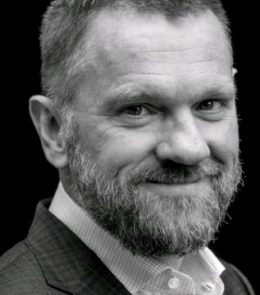
One of the voices in that debate is Claude Van de Voorde, a retired lieutenant general and former commander of the Belgian Air Force. After a military career spanning more than forty years, he now works on resilience and strategic preparedness for companies and governments. Claude Van de Voorde is “of counsel” at FINN/Gosselin & de Walque, where he helps companies with their strategic positioning on topics such as resilience and defense.
His message to companies is simple: Today, war is no longer fought exclusively on the battlefield — in Ukraine, Sudan, or the Middle East. Conflicts also seep into our economies through polarization and disinformation, cyberattacks, sabotage, energy dependency, and geopolitical pressure.
In that context, two concepts are becoming increasingly central: sovereignty and resilience. Who controls critical technologies? Who manages supply chains? Who decides on energy, data, and defense capabilities? These are no longer purely military questions.
At the same time, more and more companies are looking at the defense industry as an economic opportunity. Security, resilience, and defense are therefore rising rapidly on the agenda for businesses and SMEs.
Defense requires a whole-of-society approach
Lieutenant General Van de Voorde, you have long advocated a whole-of-society approach to defense. Why is this so urgent today?
Claude Van de Voorde: Ten years ago, we were living in what I call a war of choice. There was a conflict somewhere — for instance, in Iraq — and countries could decide whether or not they wanted to participate. Some countries said: We will join. Others, like Belgium, said: “Oh, I don’t really feel like it. Maybe next time.” That was NATO 2.0.
Defense is not only the responsibility of the military. It also involves infrastructure, energy, cybersecurity, logistics, industry, and even the preparedness of households in case of crisis.
Claude van de voorde
Today, we are in NATO 3.0. And that again looks very much like NATO 1.0, during the Cold War. Each country once again has a responsibility to contribute to defense and deterrence. Defending and deterring — those are once again the key concepts.
After the fall of the Berlin Wall, we lived for twenty or thirty years in a kind of “love-and-peace” phase. We forgot what deterrence means. Now we need to learn it again.
Security and defense are not just about buying fighter jets, tanks, or ships — that is far too narrow a view. Those are the visible top layer. Real security requires a much broader approach.
Defense is not only the responsibility of the military. It also involves infrastructure, energy, cybersecurity, logistics, industry, and even the preparedness of households in case of crisis. That mindset is slowly starting to change, but in reality, we should move faster.
Countries like Finland have understood this for a long time. They have fully integrated the concept of total defense into their national doctrine. That means the military is not the only actor thinking about crisis scenarios. Every sector does. Every industry. Even every household.
People ask questions such as: What happens if electricity suddenly fails? What if the internet goes down? Can companies continue operating? Do we have generators? Can we still communicate?
In countries that have felt the threat for a long time, that reflex is deeply embedded in the collective mindset. Here, it still has to grow — or rather return. During the Cold War, that sense of alertness was much more natural than it is today.
What does this new security context mean in practice for Belgium?
I believe we are still reasonably well organized. But many plans need to be dusted off. During the Cold War, those scenarios were fully developed. Afterwards, they gradually faded into the background.
If American, British, or Canadian troops arrive here — for instance, in Antwerp or Zeebrugge — it is our task to receive those forces, organize them, and allow them to move further east. In NATO terminology, this is called reception, staging, and onward movement. Belgium has an important responsibility in that regard.
Three major plans are currently being developed. The first is a defense plan: What do we do if a crisis erupts here? Where do we deploy our units? Do we protect the ports, the nuclear power plants, NATO headquarters? Those kinds of questions.
The second is an enabling plan: How do we ensure that reinforcements from other NATO countries can quickly move eastward? That concerns logistics, infrastructure, and transport.
Those two plans are almost completed. But there is also a third element: a resilience plan. That falls under the responsibility of the National Crisis Centre. It addresses the question of how we strengthen the resilience of the country as a whole — how we ensure that our infrastructure, economy, and society can withstand crises.
Every company must realize that it can become a strategic target — especially those active in high technology, pharma, AI, or critical infrastructure.
claude van de voorde
There is still work to be done. But you also feel that the willingness to invest in defense is growing again — not only in military equipment, but also in the resilience of our society.
Hybrid warfare and strategic targets
Are we at war today?
Yes, we are in a hybrid war. Hospitals are becoming victims of ransomware attacks; companies are being sabotaged; intellectual property is being stolen. We see sabotage of infrastructure, cyberattacks on critical systems and disinformation campaigns aimed at influencing public opinion. All of these are elements of hybrid warfare.
Every company must realize that it can become a strategic target — especially those active in high technology, pharma, AI, or critical infrastructure. These are sectors where knowledge, data, and innovation have strategic value.
What does that mean concretely for companies?
It starts with awareness. Do I know my employees? Do I know my subcontractors? Who enters my premises? Who has access to my systems? Am I alert to possible insider threats?
Then there is physical security. Can anyone simply walk into my company? Are critical installations protected? Am I drone-proof? Many companies think security is mainly an IT issue. But it goes far beyond that.
Resilience starts with your value chain. You have to ask yourself: Am I truly Belgian or European at my core? Or am I dependent on players outside Europe for crucial components? Dependency on Chinese or other non-European suppliers should be as small as possible. If the plastic rotors of a drone come from China, that may be acceptable. But the heart of your product — the chips, the software, the high-tech knowledge — should come from a trusted partner. In other words: Made in Europe. We must learn to stand on our own feet first.
European defense investments
Europe is investing heavily in defense again. What does that mean for companies?
Within NATO, there is a commitment to spend 2 percent of GDP on military equipment. Belgium will have to catch up, especially in terms of quantity. At the same time, governments also want to invest in societal resilience: infrastructure, cybersecurity, and protection of critical nodes. That creates opportunities for companies.
But companies that want to work with defense must have patience — and sufficient resources. You have to be willing to invest without any guarantee of success. Perhaps a tender will appear and someone else will be twenty percent cheaper. Then you have invested and still lose the contract. That risk is part of the game.
The problem is that “Europe of defense” does not really exist yet. Large countries still tend to think nationally.
claude van de voorde
How can an SMEs reduce that risk?
By always thinking in terms of dual use. In other words: Can what I develop for defense also be used in the civilian world? For Belgian SMEs, this is crucial. We do not have a large end-to-end defense industry like France or Germany. We must look at where we can join as a subcontractor. Which niche capability do I have in which I am technologically ahead? Where can my expertise make a difference? Very often, the final product will come from large international players such as Rheinmetall or Thales. But beneath that sits a whole chain of suppliers and subcontractors. Belgium has strong companies such as FN Herstal, Sonaca, and Barco. But much innovation happens in smaller companies. They must organize themselves and find their place in that ecosystem.
How does Europe perform in that respect?
The problem is that “Europe of defense” does not really exist yet. Large countries still tend to think nationally. French or German companies often say: “My product is nationally developed.” If they have to integrate Belgian companies, that costs time and money.
That is why I advocate a bottom-up approach. Work together with like-minded countries that face the same needs. Pool resources and develop solutions jointly. A good example is the European Air Transport Command, a partnership between Belgium, Germany, France, Luxembourg, Italy, the Netherlands, and Spain for military air transport. By sharing resources, you work more efficiently and reduce costs.
Belgium has historically had a difficult relationship between defense and industry. Is that changing?
After the Agusta scandal, a wall was built between the military and industry. If you do not talk to each other for decades, there is no trust. That trust now needs to be rebuilt. In countries such as the United Kingdom or France, cooperation between defense and industry has always continued. There, the defense industry is also seen as a strategic economic sector. In Belgium, organizations such as the Belgian Security & defense Industry, led by Stéphane Burton, are trying to rebuild that bridge. But it takes time.
The core of resilience: economy and defense
The defense industry is booming, with conferences and fairs such as BEDEX and Eurosatory. How should a company prepare for such events?
Preparation is key. First, look at who is participating. Who is active in my sector? Who should I talk to? Visit the large players. Go to the defense standdefense. Speak to people responsible for material resources, because they decide on procurement. Also talk to operational commanders — they know which capabilities will be needed in the future. And ask yourself: Where can I enter as a subcontractor? How do I become part of the iceberg beneath the large contract?
Resilience requires a whole-of-society approach. Economy and defense cannot function separately.
claude van de voorde
How do you see the tensions between ESG and defense?
We see a clear shift. For a long time, banks and investors were very reluctant. defense was excluded because it did not fit the ESG framework. But people are increasingly realizing that security is a precondition for sustainability.
That said, more attention is being paid to energy use, environmental impact, and sustainability. Belgium is historically a pacifist country — sometimes even a bit naïve. But reality is forcing us to look at things differently.
What is the core of resilience?
Resilience requires a whole-of-society approach. Economy and defense cannot function separately. The ecosystems must get to know each other. If you do not know each other, there is no trust. And without trust, there is no cooperation. We have the brains. We have technology, knowledge, and innovative scale-ups. What is missing is structural cooperation and the willingness to “think European”. Spending more money is necessary. But spending it better is just as important.
BEDEX: a bridge between defense and industry
On March 12 and 13, Brussels will host BEDEX, the Brussels defense Exhibition & Conference. The event brings together defense organizations, security services, technology companies, and policymakers to discuss military innovation, cybersecurity, and strategic resilience. In a context of war at Europe’s borders and rising geopolitical tensions, BEDEX aims to build bridges between defense and industry.